
By Yohani Gwangway
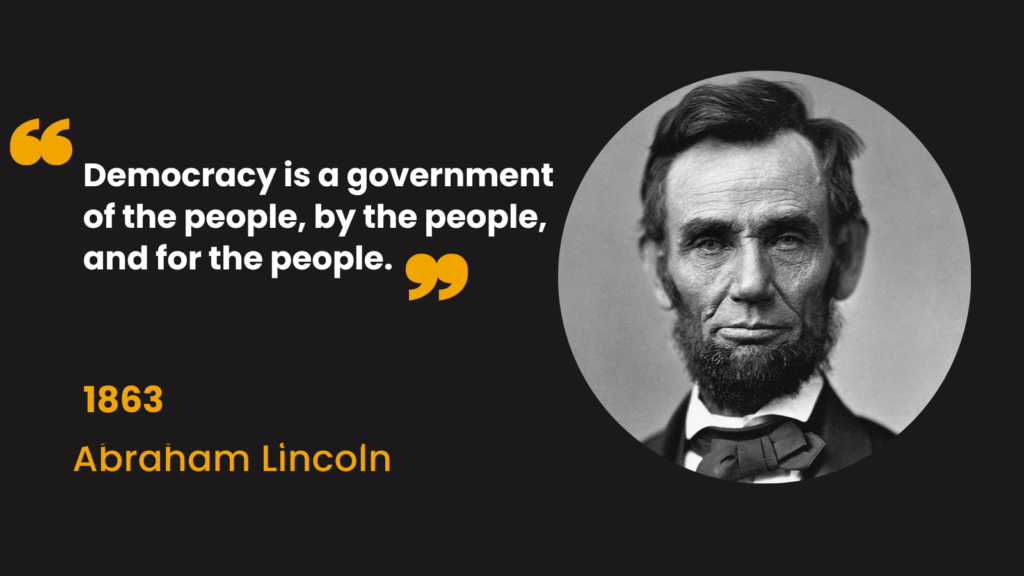
“Democracy is a government of the people, by the people for the people”. This is the statement of the 16th President of the United States Abraham Lincoln in 1863 trying to give a brief meaning of democracy. Elsewhere, democracy is understood as a leadership system that takes into account the wishes of the people and decisions are made based on the opinion of the majority without neglecting the opinion of the minority.
Tanzania, like some of the African countries, is considered as a democratic country. Since its independence, there have been efforts to achieve democratic standards that are compatible with the foundations of Tanzanian civilization. Others have been saying that Africa needs to have its own type of democracy that is compatible with the environment, culture and attitudes of Africa.
The history of the African continent shows the system of governance such as Royal, Chief and many other regimes before the arrival of the colonialists. After the arrival of the colonialists, many things changed and the administrative system went from the hands of the Africans to the control of the colonialists.
Colonial leadership systems were oppressive and exploitative to the African people. The colonists made sure they kept all the administrative resources including the main economic sources. This type of leadership oppressed the Africans and later began to demand their independence. The system of governance that was used by the colonialists did not come from the people, did not care about the people, and was not for the people.
Due to this type of governance, African countries and other countries in the world that were ruled by authoritarianism began to need a change in the leadership system. Their quest was to get a system that comes from the people and can be held accountable by the people.
Tanzania during the colonial period
Tanzania (formerly Tanganyika), was ruled by several colonialists. Tanganyika was under the German and later British administration. Both administration was oppressing and discriminating the black people. This discrimination existed in the way of living and the way of controlling the sources of the economy. Germany began to rule Tanganyika after the Berlin Conference in 1885 which decided how Africa would be ruled by colonialists. Zanzibar on the other hand was under Portugal and later under the sultanate rule from Muscat, Oman.
Later in 1916, during the First World War, Britain took control of Tanganyika due to Germany’s defeat and British rule officially began under its Governor Sir Horace Byatt. Since these regimes were not by the will of the people, they do not exist for the interest of the people, that is why the change to demand independence began. The goal being to find a system of government for the people (The citizen of Tanganyika), which originates from the people (The citizen of Tanganyika) and works for the people (The citizen of Tanganyika).
Tanzania after Colonialism
After a long struggle under the Tanganyika African National Union (TANU) in 1961, Tanzania (Tanganyika at that time) gained its independence from the British. But still the thirsty to change the system of governance that will come from the people and for the people continued. There have been sporadic efforts to strengthen these leadership systems over the years.
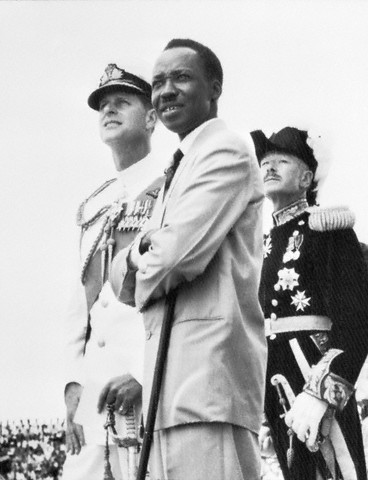
The movement to change the one-party system or the regime that does not allow the choice of more than one party began in different areas. Tanzania, like many countries, began to change and accept some governance systems due to change and need. Trough this change Tanzania began to enter a new era that brought competitive politics.
Tanzania During Multi- Party in 1992
In 1992, Tanzania officially entered into a multi-party system after several countries influenced this type which will enable competitive politics and choice of the people. The goal being to give the citizen to decide what kind of leadership they need from the policies of various political parties. It was not easy to enter the multiparty system in Tanzania. Many citizens expressed their wish to remain with the one-party system.
The change was championed by the Nyalali Commission which was established in 1991, and had a total of 23 members. The Chairman was Judge Francis Nyalali, the Vice Chairman was Abdulwahid Borafia while the Secretary of the Commission was Julius Sepeku. The other 10 members were from Tanzania Mainland while the other 10 were from Zanzibar. Nyalali’s commission recommended many things related to the governance system in Tanzania, including changes in the way politics are conducted.
Later, the country’s leaders decided to enter into a multi-party system to bring competitive politics. Some political parties were established in 1992, 1993, 1994 and 1995. In 1995 Tanzania conducted its first multi-party election.
The First Multi-party Election in 1995
For the first time, Tanzania held its multi-party elections in 1995 with 13 parties. In that competitive election, the National Convention for Construction and Reform Party (NCCR-Mageuzi) gained the popularity under its presidential candidate, Augustine Lyatonga Mrema. This competition was between him and Benjamin William Mkapa from a ruling party- Chama Cha Mapinduzi (CCM). After the election, Benjamin William Mkapa won with 61.8% while Augustine Lyatonga Mrema got 27.8%. From there, competitive politics began. People started to vote for the party policies, arguments and they had alternative choices
The Trend and state of Democracy now
Since the introduction of multi-party system in Tanzania, there have been great strides until recent years. Tanzanian politics and the way of leading the country have given way to competitive politics despite several challenges. Since Tanzanians chose to be a democratic country, many elections are held to find leaders based on the decisions of the people.
Since the first multi-party election in 1995, the other elections in 2000, 2005, 2010, and 2015 were dominated by competition despite the existence of small defects in these elections. In 2019, in the local government elections and the 2020 general elections, there were changes that were never expected in Tanzanian politics. There were cases of withdrawal of candidates, especially of the opposition parties in the election, the opposition candidates failing to return forms since the offices were closed and other reasons.
As a result, the ruling party CCM won the 2019 local government elections by 12,260 villages equal to 99.9%, 4263 streets equal to 100% and 63,970 sub villages equal to 99.4% while in the 2020 General Election it won by 84% of the vote for the Presidential election.
The 2020 election aroused the emotions of many people who wondered if Tanzania is a country that respects the Principles of Democracy. In this article we have spoken to politicians, analysts and lawyers to get their views on the state of democracy in Tanzania.
Despite various problems, some analysts say that the state of democracy in the country is still good. Hamduny Marcel is a political analyst in Tanzania who from his point of view sees the trend as good.
“The direction in general is good because democracy has its dimensions. Democracy includes the freedom of expression, democracy includes the condition of people to choose and be elected, and democracy includes people being equal before the law and other such things.” Says Hamduny.
Recent elections are surrounded by undemocratic processes starting from the stage of filling out the forms, returning the forms, candidate campaigns, and the results themselves. In the 2020 general election, Cha Mapinduzi (CCM), took almost all the parliamentary seats in what some opposition leaders called the “Dirty Election” of 2020.
Some members from the opposition parties were hurt and others were detained due to their political positions. The repercussions of this are not yet fully healed despite efforts made including reconciliation between the ruling party CCM and the opposition parties. The political battleground seems unbalanced.
It is for these reasons that the Treasurer of CHADEMA Youth Wing, (BAVICHA) from Ukonga Constituency in Dar es Salaam, Elyneema Yuda sees the state of democracy in the country as still not satisfactory by highlighting the ongoing security issues
“The state of democracy in the country, in fact, is still not satisfactory to a large extent because we see human rights violations, we see people disappearing, people being captured, but in reality in a democratic country you would not expect this to happen.” Elyneema Yuda explains.
With the ongoing state of democracy in Tanzania, Maduhu William, a Lawyer who is an Electoral, Governance and Democracy Officer from the Legal and Human Rights Center (LHRC) believes that democracy in the country depends on the will of the leaders present at the time.
“Our democracy has been relying more on the will of the President who is in power at that time than on political, legal and constitutional systems. What this means is that if a good President comes with a good will to respect people’s rights then we will congratulate him and praise him and see that we have a recovery. When a President in office doesn’t respect democracy, we start complaining because our country does not have stable systems.” Says Maduhu William.
Maduhu advises that the presence of strong and stable systems is the basis of this practice of leading the people by relying on the vision and will of the leaders.
“As a nation, this behavior and custom of relying on vision or one’s will is a behavior that we should stop, let’s build systems. Let’s build strong institutions that will control anyone no matter who they are. Our fellow Kenyans, their Electoral and Institutional Systems do not look at the President’s declaration, even their Judicial system, you see, the Court can annul the Election.” Says Maduhu.
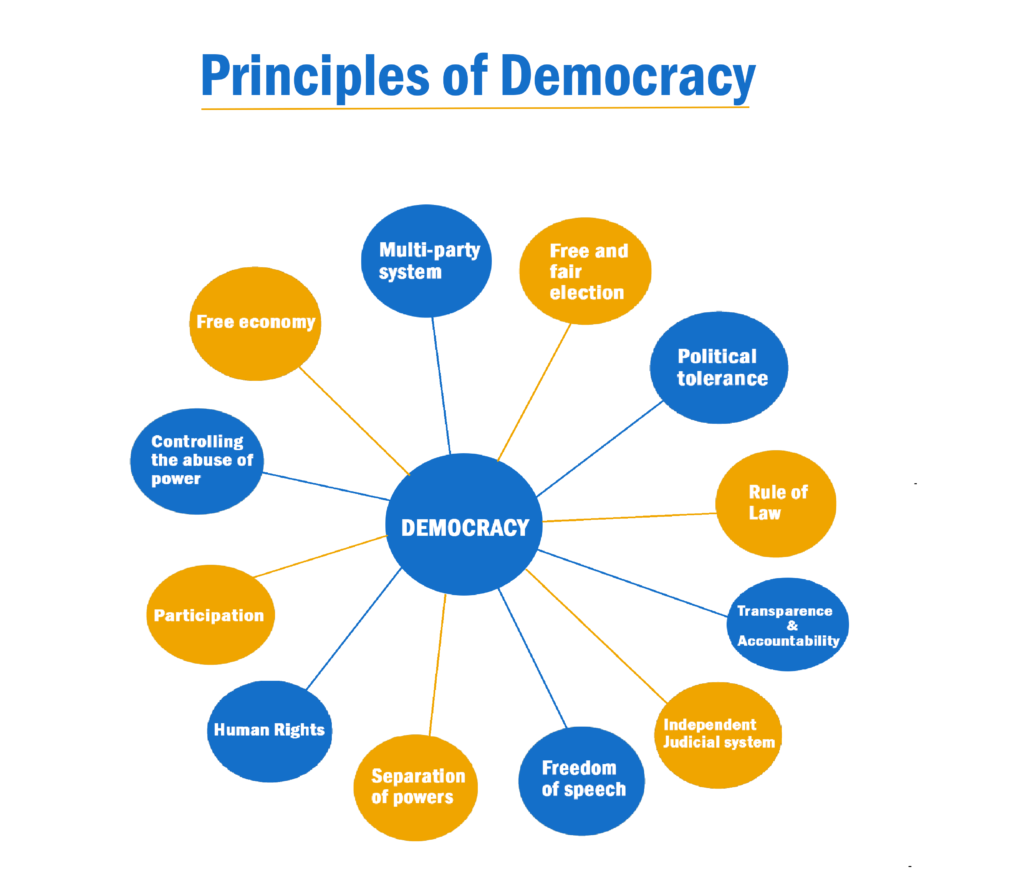
In the principles of democracy there are several things that a democratic should consider. Mostly, is about the leadership system that is acceptable to the majority of the world. In this section we look whether our country follows democratic principles or not.
Citizens’ participation
The participation of citizens in leadership processes, including their right to run for the office, to vote, to be heard, and other related rights, is a crucial principle in a democratic country. This makes citizens to realize that it is their responsibility to decide the fate of their lives. In recent years there have been statements that undermine citizens’ participation of electing their leaders. These statements indicate if people do not choose the ruling party, they should forget about development.
The former President of Tanzania John Pombe Magufuli, was once quoted saying that he cannot pay salaries and give cars to Cities, Towns or District Directors and then allow them to announce an opposition candidate as a winner.
Such statement disappoints the participation of the citizen in a decision making including political participation. This statements stands as sign of disrespecting peoples decisions to choose the person they want by making them fear that they will lose development projects if they choose otherwise.
Free and Fair Election
Elections in a democratic country should be free and fair. This freedom starts from how Electoral Commission members are appointed, the election preparation including the ballot papers, respecting the decisions of the people, not interfering in the election process for political reasons and other reasons. In the last election in Tanzania,(2019 and 2020) which International Observers said was free, the situation showed the breaking of many procedures while the opposition parties said there was no election.
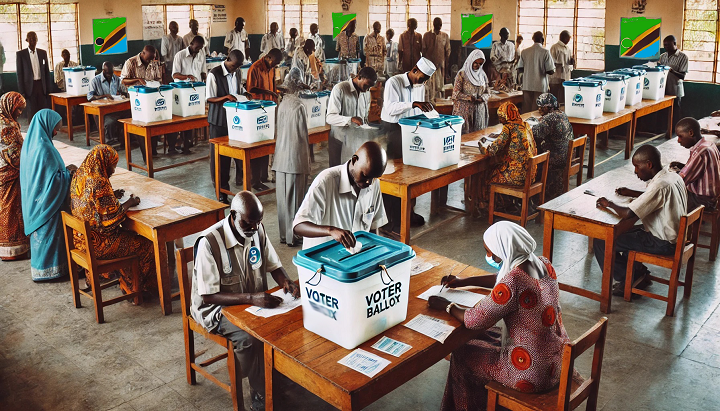
In some incidents, people were captured and others were politically sued. There were clear incidents of taking fake votes into the polling stations and other issues that indicated non-compliance with the principles of free and fair election. A good example is the incident in Kawe Constituency where the candidate of CHADEMA, Halima Mdee, seized the votes that were being entered at the polling station. The Electoral Commission eventually announced Bishop Josephat Gwajima from the ruling party (CCM) as the winner.
Recently, there have been statements by some leaders who have been bidding that in 2020 the government created the environment for them to win. Among them is the statement of the former Longido District Commissioner, Marco Ng’umbi.
“The environment (election process) in 2020 did not come by itself because you were the best candidates, it was the environment that had been created by the government and the government made you go unchallenged.” Said Ng’umbi when addressing Ward Councilors in Longido .
After the 2020 elections, the leaders from the opposition parties called for demonstrations which later led their safety to be in jeopardy. Godbless Lema, Ezekiel Wenje, Tundu Lissu and others who are not famous fled out of the country and found temporary asylum abroad to save their lives. The Chairman of CHADEMA party, Freeman Mbowe also transferred his investment from Tanzania due to frequent attacks. It is due to these reasons, we need to evaluate whether we are really moving forward or going backward democratically.
Despite these problems, analysts see that there is still a chance to have a free and fair election after the recent minor changes in Election Act. One of them is the creation of the Independent National Electoral Commission (INEC).
“The main issue to consider is that this Commission that we have has not managed any election, the main issue is to wait and see that the Independent National Electoral Commission will be the same as the former Electoral Commission and its attitudes and so on! And if that’s the case then let’s say then not now.” Says Hamduny Marcel.
On his side the Chairman of the CHADEMAs National Youth Wing (BAVICHA), John Pambalu says he does not see the environment for free and fair elections, referring to the Local Government Elections in 2019 and the General Elections in 2020.
“The elections that I have witnessed in 2020 and 2019 do not fully reflect that our nation is democratic in the past four years, even the by- elections held during the administration of President Samia do not fully reflect the meaning of democracy in our nation,” says Pambalu.
Despite the efforts to change some things, there is still the challenge of the statements from government top leaders that show disrespect for the people’s decision in ballot box. Recently, the statement of the Minister of Information, Communication and Information Technology, Nape Nnauye caused confusion to the citizen. He was later dismissed from the office.
“And because I’m an election geek… the results of the vote don’t have to be what’s in the ballot box, it depends on who’s counting and announcing. And there are many methods, there are legal, there are semi-legal, and there are illegal and they can all be used.” Nape Nnauye’s statement.
The Rule of Law
Observing the rule of law is an important step in a in a democratic country. This concept emphasizes the use of existing laws in making decisions as well as how to lead people. This is one of the key issue needs a deep reflection if our country really respects the rule of law.
For example, there are incidents of arrests made by the Police Force for suspects of various crimes. One of the incidents is the arrest of Kombo Mbwana without the Police agreeing to hold him for 29 days. Despite the law requiring police officers to identify themselves and explain the crime of the suspect, but in some incidents the arresting procedure is not observed.
Other issues are statements by government leaders that are contrary to the rule of law and principle of human rights. Among them is the statement of the Dar es Salaam Regional Commissioner, Albert Chalamila.
“I don’t see the reason of giving a chance to someone who breaks down the door and steals something, even if he has stolen salt. His entrance means he has accepted three things, he has agreed to steal, he has agreed to kill, he has agreed to be killed. And if he has agreed to be killed, what are you waiting for.” Says Chalamila.
In relation to this statement a political analyst in Tanzania, Hamduny says that he sees the rule of law being followed but we should not follow the statements of the leaders who are just expressing their opinions.
“Dar es Salaam Regional Commissioner is not the constitution of the country, the rule of law does not care who, where and what he has spoken. Regional Commissioner can be dismissed and replaced, so he cannot be a debate in such a matter, he has spoken words that resonate to his thoughts.” Says Hamduny.
Political tolerance
Political tolerance in a democratic country is healthy. This tolerance includes tolerating criticism, not disrespecting each other, answering the other side with arguments, not inciting violence and making sure that the statements made do not cause anger and rage on the other side..
There are statements by some leaders of political parties that show their inability to tolerate. The statement of the Chairman of CCM Youth Wing (UVCCM) in Kagera region saying that critics of the President should not be searched if they disappear is the recent examples.
“If there is someone who thinks he has the freedom to stay online with his phone the whole day, insulting the leaders, if we make him disappear, the Police Force do not look for them“. Said Faris Buruhani, the chairman of UVCCM in Kagera region.
Apart from this, there is a statement by the former Chama Cha Mapinduzi party’s (CCM) Ideology and Propaganda Secretary Paul Makonda, who claimed that Tanzania has no opposition parties.
“Tanzania does not have an opposition party, Tanzania has whistleblowers who gathered in the name of opposition.” Explained Makonda.
Statements of this kind do not show respect to other political parties. These words can be interpreted in a way that shows contempt and sometimes can cause violence in a country. On his side BAVICHA Chairman, John Pambalu says there is no political tolerance citing some incidents.
“There is no political tolerance. If there was political tolerance, we would have not witnessed the killing of opposition leaders, we would have not witnessed the disappearances, captures, we would have not witnessed the government interfering in commemoration of the World Youth Day and arresting more than 500 CHADEMA supporters.”
Independent Judicial
Among the important administrative structures is the judicial system. Article 107 of the Constitution of the United Republic of Tanzania states that, the authority with the final say in the provision of Justice in the United Republic of Tanzania shall be the Court. It is with this sensitivity that the Judicial system needs to be independent. This instrument of justice should not be swayed by another axis.
In Tanzania there has been the cases that raises questions about the independence of the judicial. Some of the leaders’ statements show disagreement with the court’s decisions in different matters. But the recent statement made by Rostam Aziz, a former Member of Parliament through CCM party that our courts are directed by phone shows shows disrespect to the judicial system in Tanzania. He later apologized for his statement.
Elyneema Yuda a member of CHADEMA party says he does not trust the judicial system.
“We see our judicial system at different making decision that some politicians and some people are complaining that they do not do justice.” Says Elyneema Yuda.
Transparency and Accountability
The concept of transparency and accountability is one of principles of democracy, which emphasizes openness so that people to have confidence with their government. Also, the government officials or leaders must be held accountable for their wrong doings or for not being responsible, since they actions have impacts to the citizens and the nation as a whole.
Accountability in Tanzania is unstable. Every year, the reports of the Controller and Auditor General (CAG) reveal the misuse of the public resources, theft and even corruption and no one has been held accountable. Such kind of atmosphere in a democratic country makes citizens to feel that nobody cares about them and evils cannot be stopped.
“Transparency and accountability is still a problem in our systems. For example, the reports of the Controller and Auditor General (CAG) have shown that there is a misuse of public resources, there is corruption, but no one has been held accountable.” Said Elyneema Yuda.
Speaking of accountability, there are times when we expected some of our leaders to resign from their positions for failing to perform their duties but they did not. Back in 1977 the Minister of Internal Affairs, Ali Hassan Mwinyi resigned when Tanzanian Police Force alleged with the killings of innocent civilians.
In 2008, the Prime Minister of Tanzania, Edward Lowassa resigned from his office because of the Richmond saga.
As we are proud ourselves to be a democratic country, we need to observe transparency and accountability in various matters. The failure of being accountable is an act of contempt to the people, while according to the Constitution of Tanzania, government powers are vested to the people.
Human Rights
Adhering human rights is a fundamental principle for a democratic country. Human rights are rights inherent to all human beings, regardless of race, sex, nationality, ethnicity, language, religion, or any other status.
In some cases we have seen freedom of speech is not observed. The rights of those who express their opinions, practicing their beliefs and other rights have been violated. Several times, Police Force has been criticized for the violation of human rights.
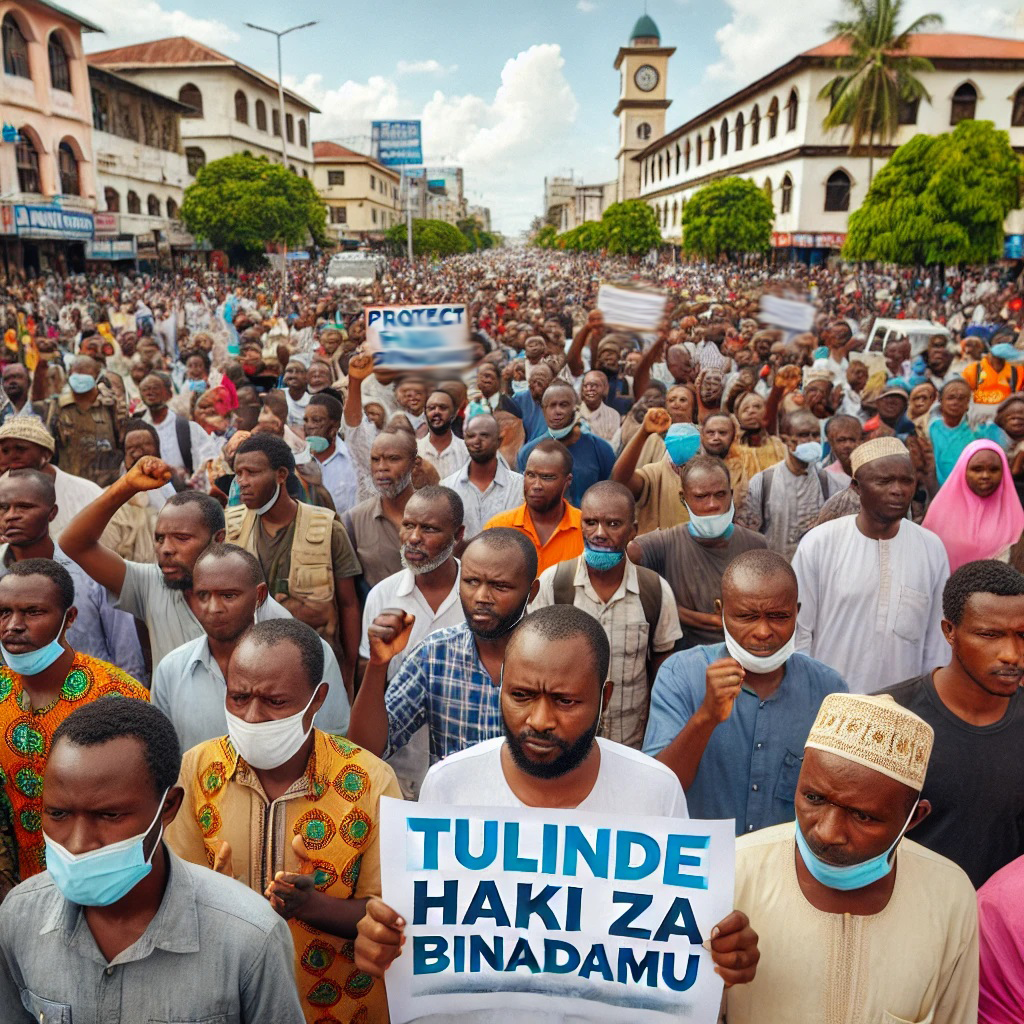
Human rights violations disturb Lawyer Maduhu William, all he sees is darkness when it comes to the issues concerning Human Rights in Tanzania.
“There are incidents of people disappearing and abducted. Recently, there has been a trend of human rights violations…Regional Commissioners are making statements to command the arrest of individuals. Therefore, human rights in Tanzania are still in limbo.” Lawyer Maduhu commented.
Tanzania is a member of various International Conventions that protecting human rights such as the United Nations Declaration of Human Rights -UDHR (1948), Lawyer Maduhu advises as a country we need to respect those International Conventions.
“As a country we need to respect various International Conventions and Agreements that we have signed which give various instructions to member countries to respect, protect and observe Human Rights.” Advises Lawyer Maduhu.
Freedom of Speech
By nature, humans are creatures that need to be heard and their opinions to be respected. Democracy respects this nature and it is one of the criteria for measuring a good leadership. In Tanzania, the freedom of speech is in article 18 of the Constitution.
Recently, some human rights activists were arrested for reporting incidents of human rights violations. For example, Boniface Jacob and Godlisten Malisa who gave information about the disappearance of people but on the contrary they were accused of spreading false information. Until now this case is still in court.
Member of Parliament, Hon. Luhaga Mpina from Kisesa Constituency Simiyu, who also criticized the Minister of Agriculture, Hussein Bashe regarding the importation of sugar, at the end Hon. Mpina was suspended from attending parliamentary sessions by the Parliamentary Privileges, Ethics and Power Committee after being found guilty of disrespecting the Speaker’s seat.
These incidents along with others seem to violate the freedom of citizens to express their opinions regarding various matters concerning their lives. John Pambalu says he does not think there is freedom for people to criticize, but there is freedom to praise the government.
“In our nation we have the freedom to praise the government. That is why you can see people who have become very famous are those who praise the government, they are called ‘Chawa wa mama’.”
Recently, President Dr. Samia Suluhu Hassan denied those who are calling themselves as ‘Chawa wa mama’ explaining that every citizen belong to her. Despite this statement, there are people who are still calling themselves such names whose have invested their time to praise some leaders. ‘Praising’ is their rights but why is it seem a crime to criticize the government?
A better Tomorrow
Our country which is famous for having peace and stability needs to consider the principles of democracy.
John Pambalu says that in order to build a better democratic country, it is important to fight for a constitutional reform.
“We have every reason to fight for constitutional reform. The constitutional reform will bring the independent judicial, the independence of the parliament and the freedom of any other matter.” John Pambalu commented.
In bringing about the reformation in our leadership system, Tanzania, like any other countries needs to consider several factors as follow.
Firstly, citizens need to be aware of their responsibilities and participate in political activities. Citizens need to be educated that their participation in the affairs of their country is fundamental. There will be no development if the citizens do not participate well in the matters concerning their tomorrow.
Secondly, the government and leaders are required to be transparent and accountable, even when there is any negligently that affects peoples’ lives. Leaders should also stop making statements that disrespect the citizens.
Thirdly, judges should make judgments based on justice. Statements that a citizen will lose a lot of money if they will goes to the court should discouraged by ensuring that economic level is not a criteria for getting justice. Courts need to honor themselves by getting rid of complaints about the performance of their staff.
Fourthly, the Parliament of Tanzania should represent the people properly and discuss matters of public interest. The Parliament members should not be seen as an instrument to protect the government, but should have the responsibility of supervising the government to bring about check and balance.
If every citizen considers their role and contribution in bringing about a better tomorrow, it is certain that we will build the Tanzania we want in which everyone will enjoy the fruits of our nation.
Author: Yohani Gwangway
Editor: Dominic Allen